02 / 05
Checklist before you ride
- Terminal or berth confirmed
- Official transport map saved
- Rank and booked zone distinguished
- Door, level and landmark shared
- Delay or change sent in official channel
03 / 05
Understand the decision
Read the terminal before you move
Check which concourse, platform exit, cruise berth or arrivals hall you will use. Large sites can have opposite taxi ranks and restricted vehicle roads that maps treat as one point.
Match booking type to curb type
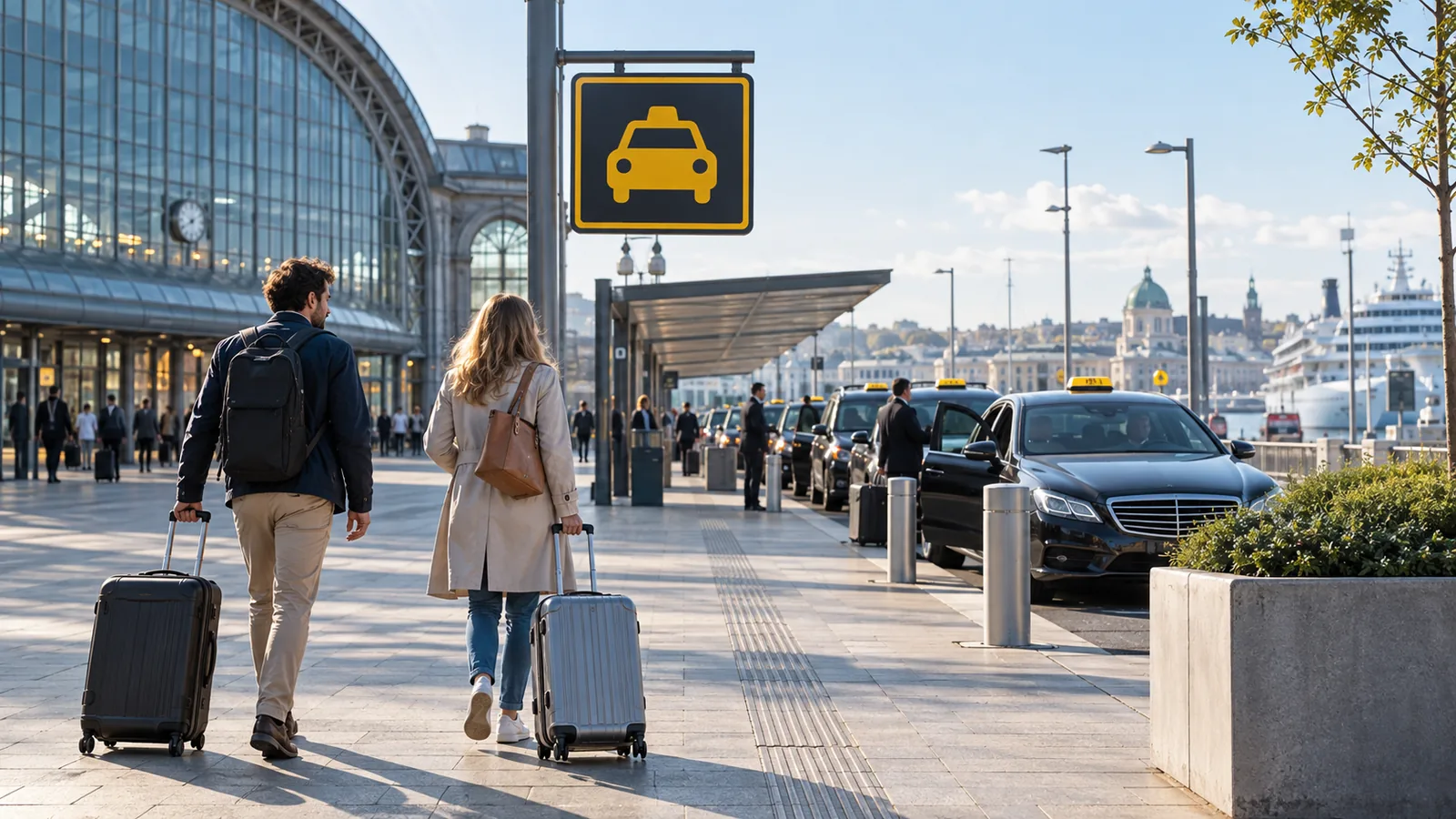
Street taxis normally use the signed rank; private hire and apps may require a car park, lane or remote zone. Do not ask a booked vehicle to stop in a rank or bus lane where it is not permitted.
Build a resilient meeting point
Share terminal, door, level, lane and a stable landmark. If a train platform or ship berth changes, update the operator through the booking channel and wait in the designated passenger area.
04 / 05
Common questions
Is the taxi rank also the app pickup point?
Not necessarily. Many terminals separate public ranks, private-hire bays and app zones. Follow the site’s current signs and map.
How much connection time should I allow?
Allow for luggage, lifts, border or baggage formalities and the walk to the correct curb. Large ports and stations can require a substantial transfer inside the site.
05 / 05
Sources and scope
Rules, fares and availability vary by place and can change. These official examples support the method; use the destination page and local authority for the current rule.