02 / 05
Checklist before you ride
- Operator authorized for full route
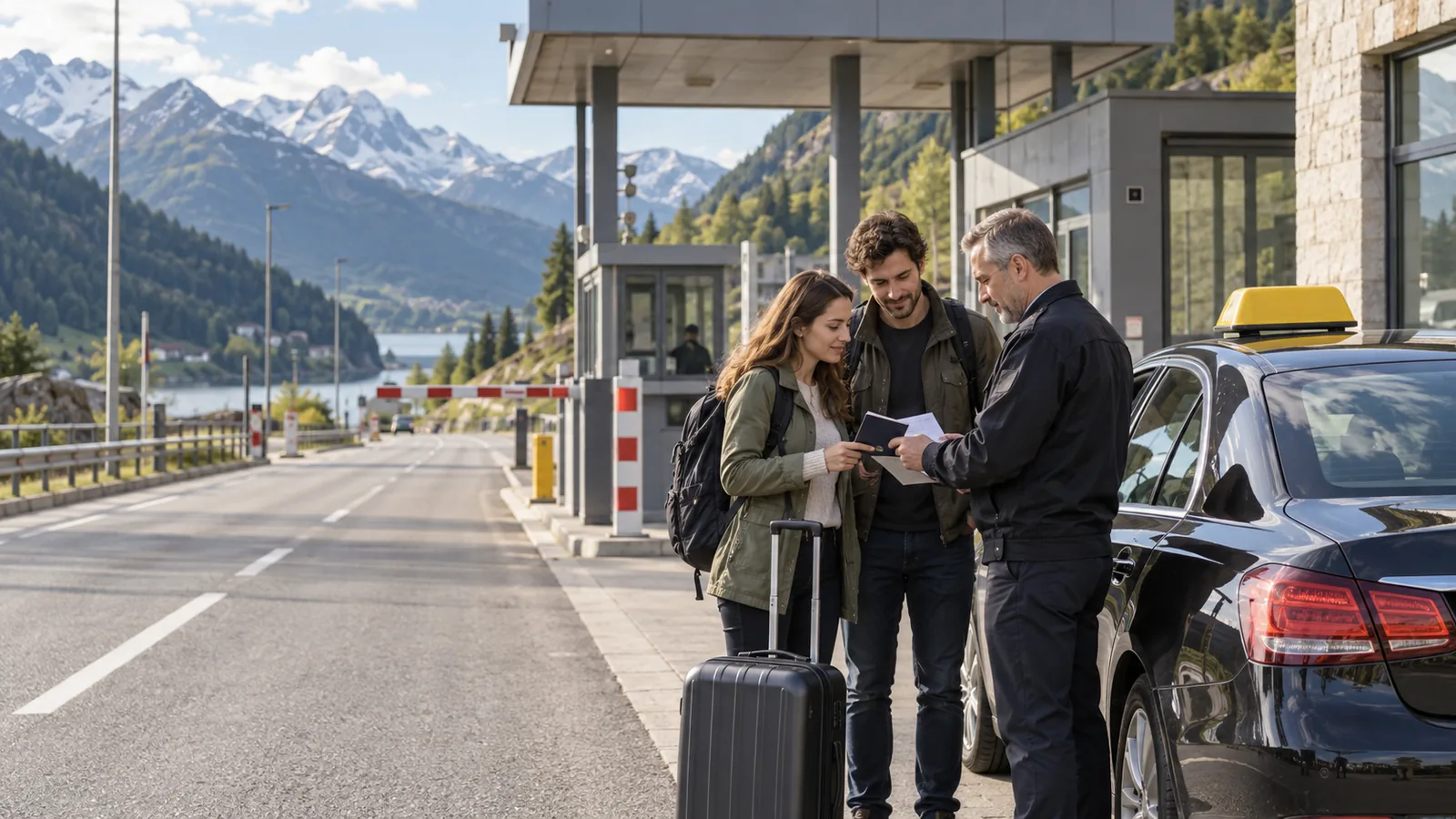
- Travel documents checked officially
- Written price and currency saved
- Border waiting and tolls covered
- Fallback and return plan stored
03 / 05
Understand the decision
Verify legal and document scope
A taxi licence may not authorize passenger service across every border. Check entry documents independently and ask the operator to confirm insurance and commercial permissions for the full route.
Write down the complete price
Record origin, destination, date, route, currency, tolls, parking, waiting, night charges, border delays and cancellation terms. Avoid relying on an informal verbal total.
Plan continuity
Confirm whether the same vehicle crosses, a transfer happens at the border or the trip ends there. Save contacts and a fallback for refusal, delay or document problems.
04 / 05
Common questions
Does a Schengen journey mean no documents are needed?
No. Carry the travel document required for your nationality and route and check current official entry rules.
Can the driver change the price at the border?
Only conditions agreed in advance should apply. Clarify waiting, tolls, exchange rate and unexpected closure terms in writing.
05 / 05
Sources and scope
Rules, fares and availability vary by place and can change. These official examples support the method; use the destination page and local authority for the current rule.