02 / 05
Checklist before you ride
- Venue transport notice checked
- Closure perimeter saved
- Primary and fallback points agreed
- Walking route kept accessible
- Price and vehicle rechecked
03 / 05
Understand the decision
Map the restricted perimeter
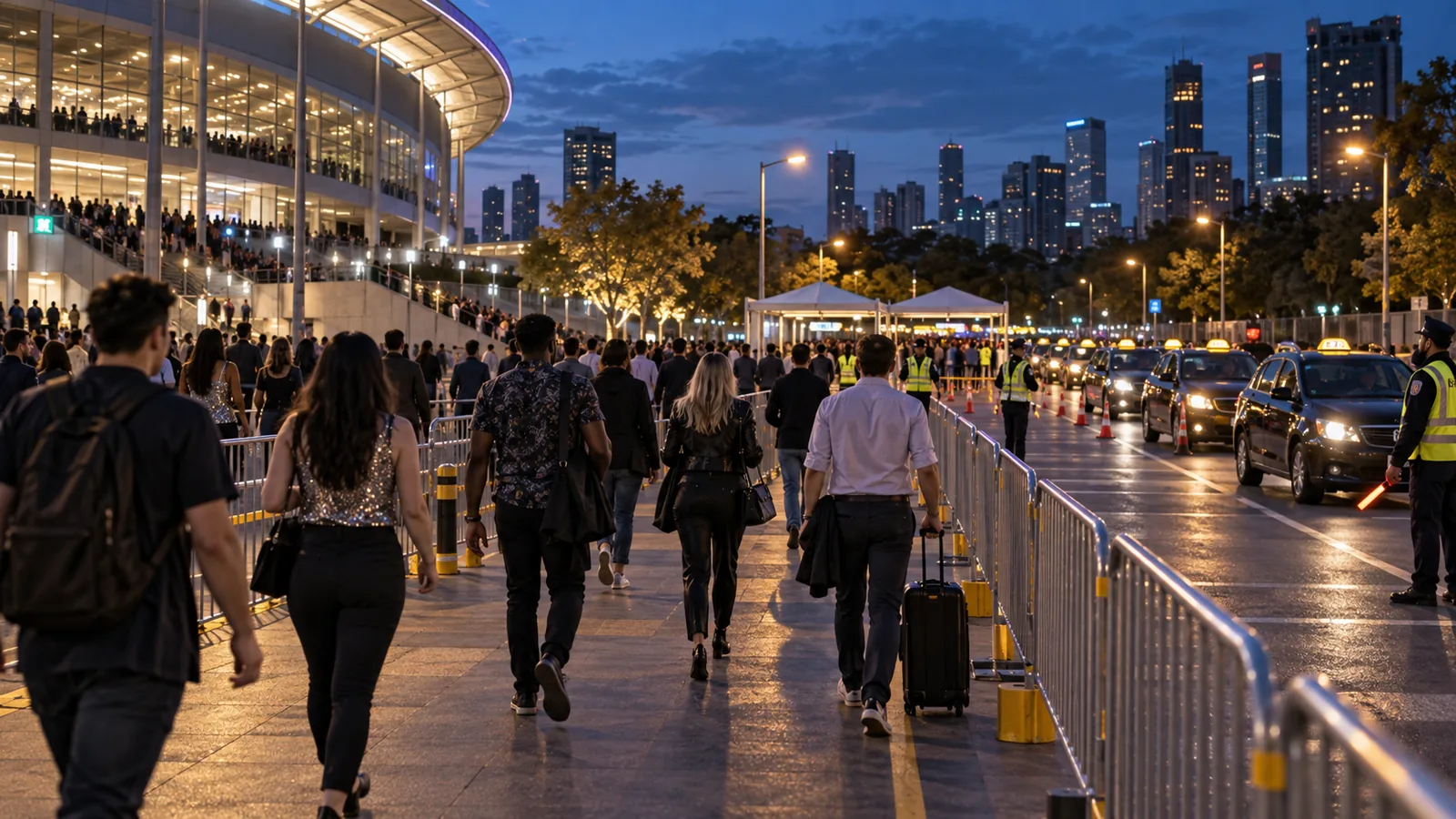
Event roads can close before doors open and remain restricted after crowds leave. Save the official taxi, ride-hail or accessible pickup location and its opening hours.
Use two meeting points
Crowds and mobile congestion can break a live pin. Agree on a named street corner or landmark beyond the closure, plus a fallback reachable on foot.
Control the wait and price
High demand changes queues and app prices. Compare the regulated rank, booked price and public transport alternative before accepting a remote pickup or long detour.
04 / 05
Common questions
Should I move the pickup pin into the crowd?
No. Use the official zone or a legal street outside the closure where the vehicle can stop safely.
Why can the driver not reach the venue entrance?
Police, venue or transport authorities may change vehicle access dynamically. Follow the current official route rather than the original pin.
05 / 05
Sources and scope
Rules, fares and availability vary by place and can change. These official examples support the method; use the destination page and local authority for the current rule.